$10 Million by 28
I reverse engineered the exact number that buys the life I want — the houses, the freedom, the optionality. Heres the math, the method, and what will kill me if Im not careful.
$10 Million by 28
The Tuesday
It's a Tuesday morning. I wake up in my house in Oak Park, Illinois. Ashlee's already up. She's thinking about the coffee shop — whether to go for it, what the space would look like, what she'd put on the menu. Nobody's stressed about money.
I check my portfolio. $4.5 million sitting in the S&P, quietly generating around $15,000 a month in passive income. Enough to eat well, live well, and never take a meeting I don't want to take.
Later, I'll fly to Huntington Beach for the weekend. We have a house there — three stories, one block from the sand, a rooftop deck where you can watch the sunset over the Pacific. My family uses it. It's theirs as much as it's mine.
I'm 28. I'm not retired. I'm still building, still obsessed, still working every hour of the day on something I care about. But here's the difference: I don't have to. Every decision I make is from a position of freedom, not survival.
That's the goal. $10 million by 28. Not the round number — the life underneath it.

The Number
Most people pick a big number and never defend it. I wanted to reverse engineer mine — to find the exact figure that buys the exact life I want, and not a dollar more.
So I did the math.
The houses.
I want to own two properties. One in Huntington Beach — the kind of house that's one block from the surf, new construction, three stories, a rooftop deck with ocean views. That house exists right now. It's listed at $3.4 million. Call it $3.5M by the time I'm buying.
The other is in Oak Park, Illinois — a real home, spacious, on a tree-lined street, close to Chicago. A nice Oak Park home runs $900K–$1.1M. Call it $1M.
I'm not buying these in cash. I'm putting 20% down on each — roughly $700K on the HB house, $200K on Oak Park. That's $900K in down payments I need liquid on closing day.
The freedom number.
This is the part nobody explains clearly. I want $10–15K a month in passive income — enough to eat Sweetgreen, buy good groceries, go to decent restaurants, and cover living expenses without thinking about it. I don't need five-star restaurants. I just need to never do the math at a dinner table.
To generate that passively, I need a portfolio large enough that I can withdraw 4% annually and never touch the principal. That's called the 4% rule — the standard financial planning benchmark that says you can pull 4% from a diversified portfolio indefinitely without running it down.
- To generate $120K/year ($10K/month): you need $3M invested
- To generate $180K/year ($15K/month): you need $4.5M invested
At $4.5M in the S&P, the math looks like this:
The market returns ~10% historically. You withdraw 4% — $180K/year, $15K/month. The remaining 6% stays invested and compounds. That's $270K a year growing silently underneath you. After 10 years of that, your $4.5M is closer to $8M without you adding a single dollar.
You're not just living off it. It's still growing while you do.
The total.
| Asset | Value |
|---|---|
| Huntington Beach house | $3.5M |
| Oak Park home | $1M |
| Liquid portfolio | $4.5M |
| Total net worth | $9M |
That's the real number. $9M gets you everything I just described. $10M is the version with breathing room — a bad market year, a house repair, life happening. The difference between $9M and $10M isn't lifestyle. It's the buffer that means you're never anxious.
$8M is the freedom number. $10M is the peace of mind number.
The Life It Buys
Here's what I actually want:
I want to get Sweetgreen and eat out at decent places — spending maybe $40 for lunch, $50 for dinner with my partner. $100 on food a day. That's it. I don't need much more than that, and I don't need five-star restaurants to feel like I've made it.

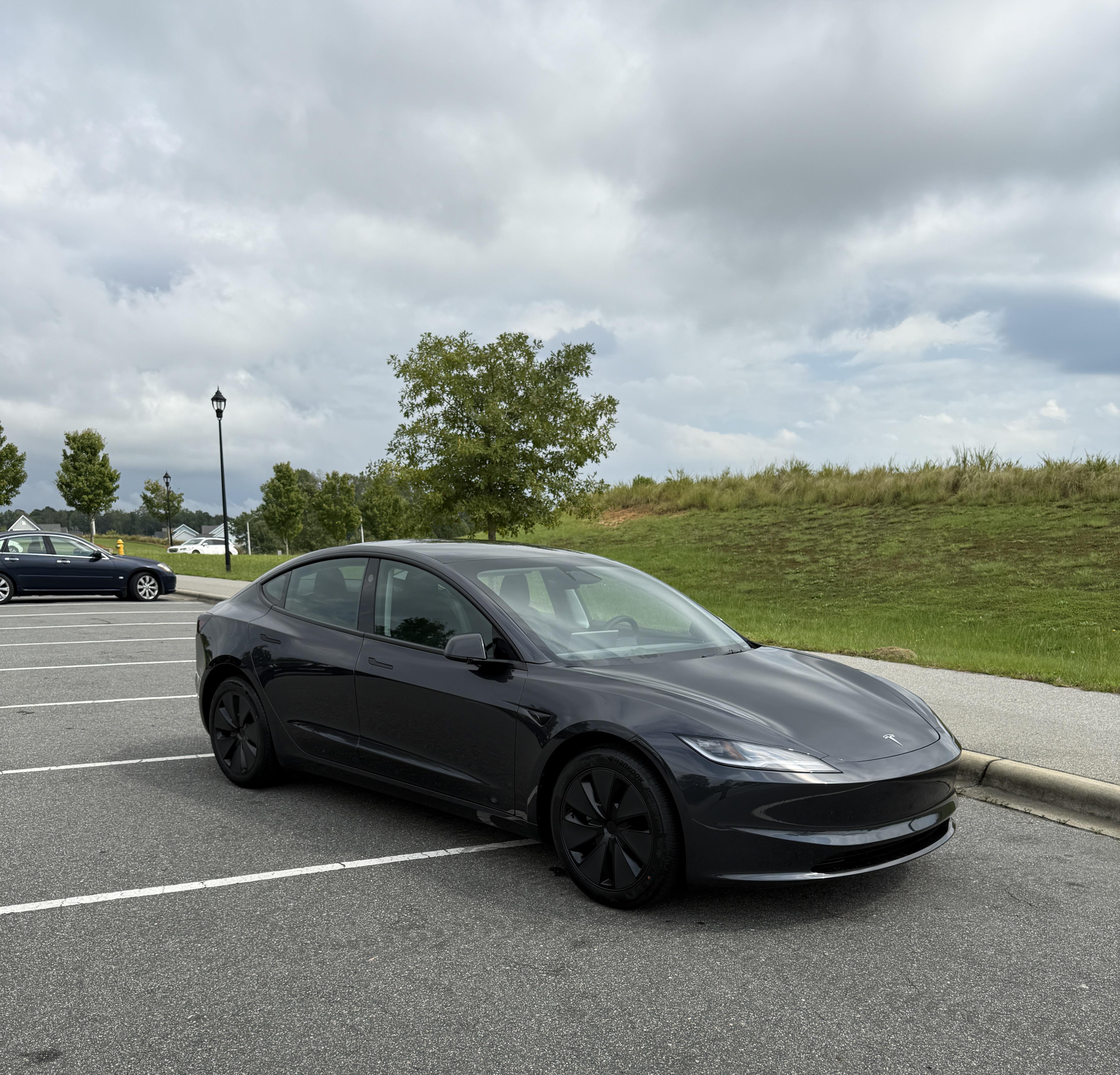
I want a Tesla. Solar panels on the house. No insane car payments, no flexing.
I want to get married around 28 and be in a position where the wedding reflects how I actually feel — not what I could afford. I want to be present for my kids when they're small. I want to have the option to work once I have kids, not the obligation. That distinction is everything.
And if Ashlee wants to open a coffee shop someday — not because she has to, but because she wants to — I want to be in a position where we can just do it. $200K to buy in, figure it out, see what happens. The fact that we can is the point.
None of this is lavish. It's deliberately modest in the most freeing way possible. The $10M number isn't about status — it's about optionality. It's about never being trapped by a number on a spreadsheet.
The money is the method. The life is the goal.
The Method
There are really two paths to $10M by 28 for someone like me.
Path 1: Join a company like Anthropic, make $300K+ in salary, ride the equity to an IPO.
The cash comp math is real but limited. After California taxes, you're netting around $195K a year. Save 60% of that aggressively and you're banking ~$117K annually — maybe $900K invested over six years. Good, but not $4.5M liquid on its own.
So the whole bet is the equity. And at the employee level — not founder level — you're realistically looking at $500K–$3M in equity value even if everything goes perfectly. Meaningful. Not freedom.
Honest verdict: gets you partway there. Probably lands you at $1.5–3M by 28 if everything works. Comfortable. Not free.
Path 2: Found a company, sell it.
This is the path I'm choosing. And here's the specific version I'm betting on:
Build a vertical SaaS company. Seed-strap or raise minimally. Keep 60–80% equity. Get to $10–15M ARR. Sell to a strategic acquirer for $50–100M.
The math: at a 5–7x revenue multiple — which is standard for a solid, sticky vertical SaaS business — a $10M ARR company exits for $50–70M. If I own 70% of that, I walk away with $35M pre-tax. After taxes, that's somewhere between $20–25M liquid in a single transaction.
That's not just the $8M number. That's the number that funds everything — the houses, the portfolio, the freedom — in one move.
The reason I'm not raising VC rounds and swinging for a billion is simple: a $50M exit where I own 70% is a better personal outcome than a $500M exit where I own 5%. The math is the same but the second path takes three times longer, requires ten times more stress, and has a fraction of the success rate.
I'm obsessed with what I call reverse engineering human experience — "Okay, they felt this, but why? They did this behavior, but why?" — and turning that into calculated variables. I don't know exactly what I'm building yet. But I know the obsession is real, and I know it lives somewhere at the intersection of human behavior, data, and software. The thesis is still forming. But I'd rather be in motion with the right obsession than standing still waiting for the perfect idea.
The acquirer will become obvious once the product is real and the revenue is there. The founders who figure out their buyer first and build backwards usually build something hollow. You build something people genuinely need, get to real revenue, and the right buyer finds you.
The Flywheel
The money alone doesn't make this inevitable. What makes it inevitable is building four things simultaneously, and making sure they compound into each other.
Net worth. Every dollar I make goes back into the machine. Anything I could invest in real estate, stocks, or financial securities gets poured back into myself or my business instead. The earlier you start compounding yourself, the more aggressive the curve.
Peer group. I want the people I spend the most time with to be between 24 and 35, building real things, making real money. I'm talking about people like Arya, founder of Searchable. Connor, founder of Funnelmob. Casper, co-founder of Payout — which he builds with Connor. These are people who have been there, done that — or are doing it right now. When your reference point is a 28-year-old who just sold a company for $30M, your standards recalibrate completely. Same actions, different outputs.
I will fall to the level of my environment. That's not a motivational quote — it's a warning I take seriously.
Content and personal brand. I've been building in public for years — on LinkedIn, Instagram, Twitter. My whole brand is built around entrepreneurship, alternative paths, and what it actually looks like to bet on yourself young. This isn't vanity. It's distribution. Every piece of content is a surface area for the right people to find me — customers, collaborators, investors, future employees.
The media flywheel. As soon as my business is generating $10–20K a month, I'm setting up a content and events flywheel: consistent value-add content, event hosting, maybe a podcast. Not as a side project — as a compounding network engine. The goal is to know as many of the right people as possible, and to be known by them. Every founder who's built something real will tell you: the network accelerated the outcome. It didn't create it, but it made everything happen faster.
These four things — money, people, content, media — aren't separate strategies. They're one flywheel. Each one feeds the others.
What Will Kill Me
I've spent a lot of time thinking about this. Not because I'm pessimistic — but because the founders who don't account for their own failure modes are the ones who get blindsided by them. Here are the traps I'm most vulnerable to, in my own words:
1. Falling to the level of my environment. If the people around me aren't building at the level I want to reach, I'll drift down to match them without noticing. This isn't dramatic — it's slow. One person who's not really building. Then two. Then the conversations get less sharp and the standards lower. I become the average of that room without ever making a conscious choice.
2. The service trap. I can make $10–15K a month tomorrow building software for people. I'm a good enough engineer that the market will keep pulling me toward consulting. And it will feel like winning because money is coming in. But I'd be trading the one thing I can't buy back — the window to build something that scales without me. Every month in service mode is a month Griot doesn't get built.
3. Undervaluing myself. This shows up everywhere — in pricing, negotiations, how I protect my time. It doesn't feel like underselling. It feels like being reasonable, being humble. But the market takes you at your own valuation. The moment I start treating my time like it's worth $1,000 an hour, other people start treating it that way too.
4. Doing what I want instead of what the business needs. Founder mode and creator mode are not the same thing. Building a cool new feature feels like working on the business — it has all the same physical motions. But if it's not the constraint, it's sophisticated procrastination. Every morning the question has to be: what is the single bottleneck right now — and am I doing that, or what I feel like doing?
5. Diffusion of focus. I have genuine range — fitness, content, building, networking. All of it pulls at me. The trap isn't that any one of those things is bad. It's that going deep on fitness for three months, then pivoting to being a full-time creator, then back to building — each transition resets momentum. Griot needs a version of me that shows up consistently.
6. Shiny object syndrome. I've lived this one before. The podcast with one episode. The Instagram pages with one post. I know this pattern. The adult version isn't quitting after one episode — it's letting Griot's vision drift every few months based on whatever conversation I had last week. Same gene, different expression.
7. Winning the money, losing the life. This is the one that actually matters most, and the one most people don't have the self-awareness to even name. I've reverse engineered $10M as the method — not the goal. The goal is being present. Having the option to be there when it counts. A wedding that reflects how I actually feel. Kids who know their dad showed up. If I hit $10M but the relationship is damaged and the people I love most are strangers to me — I didn't win. I just got rich. Those are completely different outcomes.
A Letter to Myself at 35
Hey.
You're either reading this proud or reading this humbled. Either way, I hope you're honest about which one it is.
At 22, I sat down and did the math. Not vibes math — real math. I priced out the houses, ran the 4% rule, calculated the exit multiples, and landed on a number I could actually defend: $8M to be free, $10M to be at peace.
I knew the method: build a vertical SaaS, stay lean, own the majority, sell it once, and use the proceeds to fund the life. I knew what would kill me: the wrong rooms, the service trap, the shiny objects, the slow drift away from what actually matters.
The question was never whether I understood it. The question was whether I showed up every day and did the thing, even when nothing felt like it was working.
I hope you did.
I hope you're in that Oak Park house with Ashlee, and she's doing something she loves because she wants to, not because she has to. I hope you got to be present when it mattered. I hope the people you bet on — your peer group, your co-builders, the founders you kept calling — I hope they came through, and I hope you came through for them.
And I hope that somewhere along the way, the content and the community and the flywheel helped someone younger figure out their own version of this. Because that was always the real point — not the $10M, but what it lets you build around it.
Now go do something that matters.
— Austin, 22